
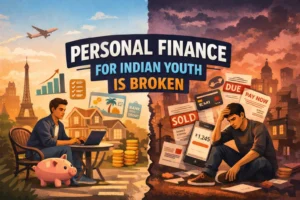
Over the last few years, while building and working in Bengaluru's startup ecosystem, I had the chance to interact closely with hundreds of young professionals—software engineers, product managers, designers, and marketers. These were people in their early to mid-twenties, earning salaries that placed them in the top tax brackets of the country.
But behind the premium credit cards and weekend brunches, I noticed a starting pattern: an almost universal lack of financial clarity and control.
I spoke to people earning over a lakh a month who had zero savings. Software developers who regularly paid credit card interest without realising how it compounded. Young professionals who wanted to buy a home or save for a higher education, but had no idea if they were on track or when they could realistically afford it. Everyday decisions—from buying a gadget to planning a weekend trip—were made with a vague sense of anxiety, rather than clear calculation.
This clarity is not missing because young Indians don't care. It is missing because our tools are broken.
In India, we have built the world’s most sophisticated payments ecosystem with UPI. We scan, pay, and settle transactions in seconds. But while paying money has become effortless, managing that money remains incredibly stressful and fragmented. The personal finance apps we use are passive dashboards. They scrape text messages to show transaction lists, plot pie charts of past spending, or push credit card offers. They show you where your money went, but they don't help you figure out where it should go next.
They do not actively guide decisions.
These apps tell users what happened in the past, but they don't tell them what action makes sense now. Money is not something to be manually managed every month. It should be something that quietly organises itself around real life.
That distinction matters more than we realise.
In India, personal finance has largely evolved as an information problem. We have apps that show balances, list expenses, calculate credit scores, and display portfolio graphs. But knowing is not the same as deciding. And insight without action is just noise.
Despite rising incomes and improving standards of living, young Indians struggle to save, plan, and compound wealth. Salaries hit accounts, sit idle for a few days, and then disappear into EMIs, subscriptions, impulsive spending, and poorly timed decisions. Credit is easy to access, but difficult to understand. Cash is abundant in fragments, but rarely intentional.
We often romanticise the idea of financial freedom or early retirement. We see peers on social media sharing stories of wealth accumulation, travel, and lifestyle upgrades. But financial confidence is not a function of high income. It is a function of predictable finances. When people know exactly what money is free, for how long, and at what cost, they plan boldly and act calmly.
In India, most young professionals cannot answer three basic questions with confidence:
This is not a discipline problem. It is a system problem.
Personal finance in India is fragmented, reactive, and overly manual. We expect individuals to behave like finance professionals in a system that offers them little real-time guidance. The result is stress, inefficiency, and lost opportunity, quietly accumulating month after month.
This gap between information and action is what needs fixing. And it is the gap FinnDot is built to address.
More in my next posts..